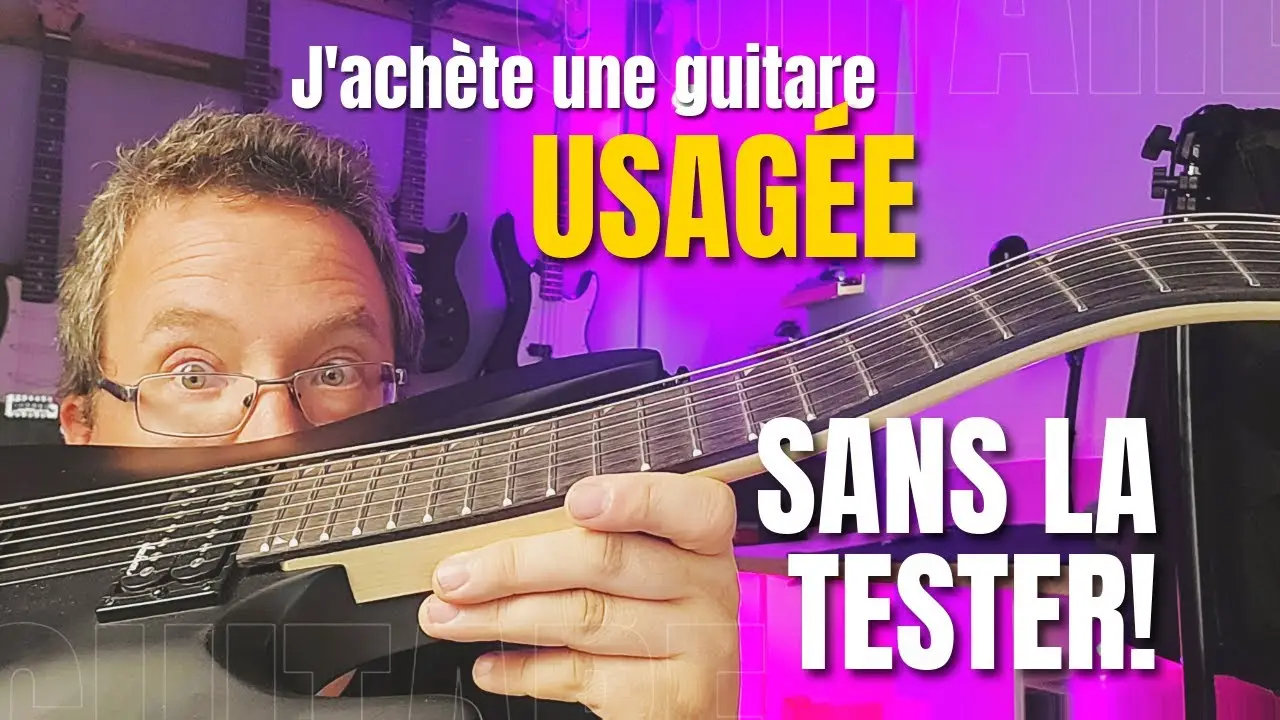
Buying a Used Guitar: The Mistake I Made
Hey everyone! Today, I'm sharing an experience that could happen to anyone: I bought a used guitar... without really checking it out before reaching for my wallet. Bad idea! In this article, I'll show you what I discovered, how I tried to correct the problems, and, most importantly, what lessons you can learn for your own purchases.

First impressions: general condition
When I got the guitar home, I noticed a string was missing, but that wasn't a big deal. Overall, the body was in good condition with only a few scratches, the tuners turned smoothly, and the electronics worked (though the selector switch could use a cleaning).

The frets are decent, not overly polished but not marked either. At first glance, the guitar hasn't seen much use. But a major problem lurks elsewhere...
A handle that is too curved and an action that is too high
To the naked eye, the handle has excessive curvature. Add to that an action measured at 2.5 mm at the 12th fret (that's huge!) and you understand that playing comfortably becomes complicated. In addition, a string was missing, so the tension on the neck was reduced... which means that the problem is even worse under normal conditions.


After measuring, I discovered that the mounted strings were very heavy: a gauge of 0.62 on the bass string! No wonder the neck "lifted" with so much tension.
Checking the frets
Once the strings are removed, I inspect the frets with a notched ruler. The result: generally flat, except for the 6th and 7th frets, which protrude slightly. With a cork wedge and my modified drumstick, I gently straighten them. It's not perfect, but enough to continue the test.


A little cleaning of the fingerboard (amaranth, a first for me) with conditioner, and the instrument is already starting to come back to life.
Truss rod adjustment… or almost
Now comes the crucial moment: adjusting the truss rod to straighten the neck. Nasty surprise: it's already screwed in all the way, without managing to straighten the neck. Worse, the neck still has a strong curvature.
So I tried a more extreme method: placing the guitar under stress, with a reverse bend, while gently heating the wood with a bag of hot rice. The idea? To help the neck "relearn" a straighter position. After a night, the result improved a little, but not enough for optimal adjustment. And above all, it left zero room for maneuver for the future.


The balance sheet
Do I regret it? Not really. The guitar is still playable, but not in ideal conditions. Above all, it's a great lesson: never buy a used instrument without testing it thoroughly. Check the state